
Depression Therapy for Women in Fairfax VA: Signs, Types & How Treatment Helps | Lola Therapy
This article is for informational purposes only and does not constitute professional mental health advice or create a therapist-client relationship.
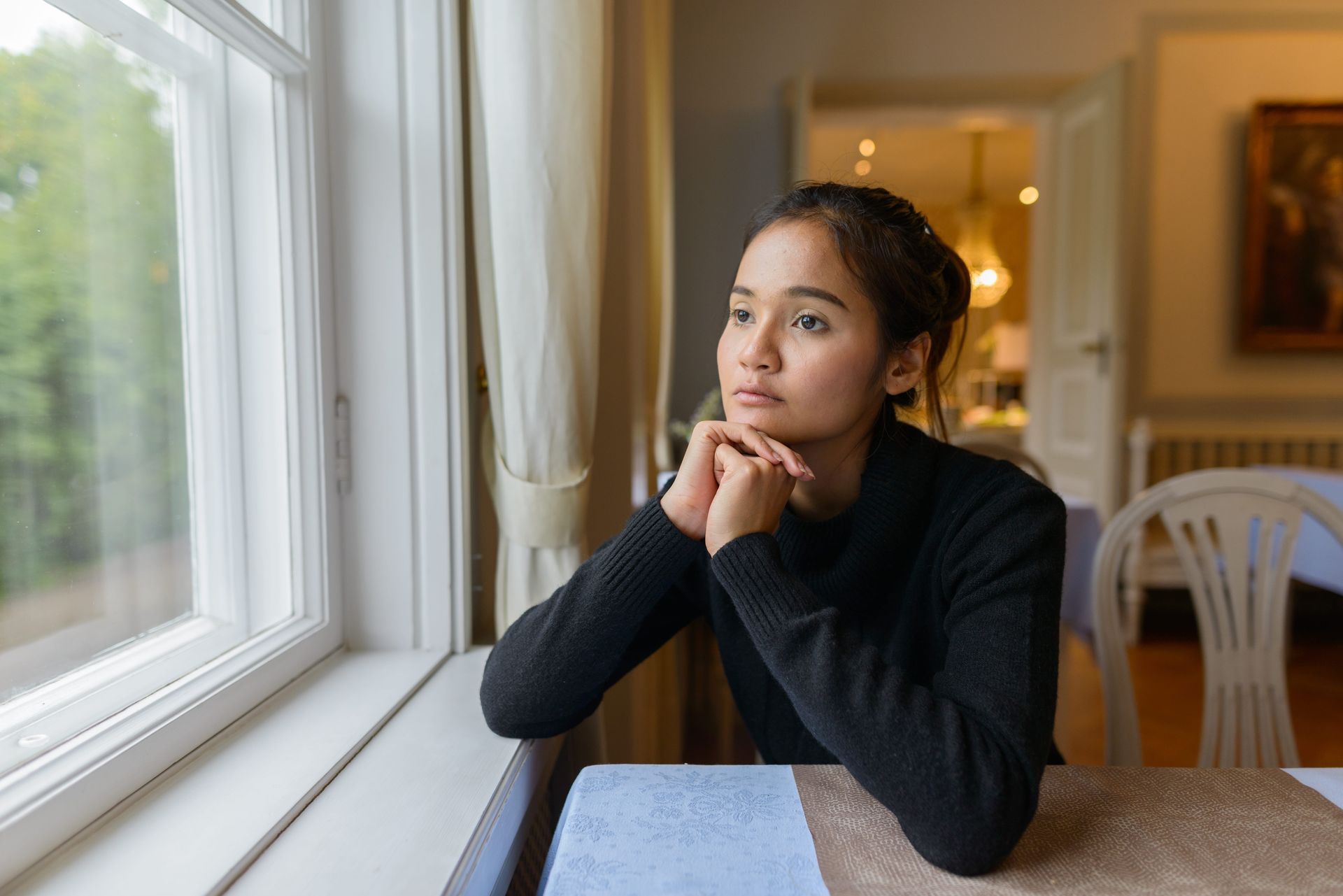
You've been going through the motions. Getting up, going to work, taking care of everyone who needs you, and doing it all while feeling like something inside you has gone quiet. Not sad exactly, or not only sad. More like hollow. Flat. Tired in a way that sleep doesn't fix.
Maybe you've been telling yourself it's just stress. Or a phase. Or that other people have it worse, so you don't really qualify for help.
That's one of the ways depression in women tends to work. It doesn't always announce itself loudly. It settles in quietly, shapes how you experience everything, and then convinces you it isn't serious enough to address.
Depression is a serious mental health condition, and it is also one of the most treatable ones. With the right support, most women who are experiencing depression see real, meaningful improvement. You don't have to wait until things feel impossible to reach out.
At Lola Therapy in Fairfax, VA, Lisa Kelleher, LPC works with adult women navigating depression, anxiety, life transitions, and the particular kind of invisible weight that comes with trying to hold everything together while struggling inside. She brings a direct, practical approach, not just listening and nodding, but actually helping you understand what's happening and what to do about it.
This guide covers what depression in women looks like, why women experience depression at higher rates, what the different types of depression involve, and how therapy, including in-person sessions in Fairfax and virtual sessions across Virginia, can help.
In This Article
- Why depression is more common in women and how it shows up differently
- Signs and symptoms of depression in women
- The different types of depression that affect women
- How hormonal changes and the menstrual cycle affect mood
- Causes and risk factors for depression in women
- When depression and anxiety show up together
- What treatment for depression actually involves
- How therapy at Lola Therapy helps women in Fairfax and across Virginia
Depression in Women: Why It's More Common and Often Misunderstood
Women are more likely to experience depression than men, and research has consistently shown this to be true across cultures and age groups. The National Institute of Mental Health identifies depression as occurring roughly twice as often in women as in men, a pattern that begins in adolescence and continues across the lifespan.
Several factors contribute to this. Biological differences, including the hormonal shifts that come with the menstrual cycle, pregnancy, and menopause, affect brain chemistry in ways that influence mood. But it's not only biology. Women also face a distinct set of social and relational stressors: higher rates of caregiving responsibility, workplace inequity, a greater likelihood of trauma exposure, and persistent social pressure around appearance, productivity, and emotional availability.
The way women experience depression is also often different from the textbook picture. While the classic image of depression involves visible sadness and withdrawal, women with depression frequently continue to function, working, parenting, maintaining relationships, while quietly struggling inside. This is sometimes called high-functioning depression, and it's one reason that depression in women goes unrecognized and untreated for so long.
Signs and Symptoms of Depression in Women
The signs and symptoms of depression in women don't always look like what you'd expect. Some of the most common presentations are easy to miss or rationalize away.
Emotional symptoms:
- Persistent low mood, emptiness, or a flat feeling that doesn't lift
- Irritability, often overlooked as a symptom of depression but very common in women
- Loss of interest or pleasure in things you used to enjoy
- Feelings of worthlessness, excessive guilt, or a sense that you're a burden
- Hopelessness about the future
Physical and behavioral symptoms:
- Changes in sleep, insomnia, early waking, or sleeping much more than usual
- Changes in appetite or weight
- Fatigue and low energy that doesn't improve with rest
- Difficulty concentrating, making decisions, or completing tasks that used to feel easy
- Physical symptoms with no clear medical cause, headaches, digestive issues, unexplained pain
- Withdrawing from relationships, social events, or responsibilities
In more serious presentations, symptoms of depression can include
suicidal thoughts, a sense of not wanting to be here, or thoughts of harming yourself. If you're experiencing this, please reach out for help immediately.
⚑ If you or someone you know is experiencing suicidal thoughts, please contact the 988 Suicide & Crisis Lifeline by calling or texting 988. Help is available 24/7.
If several of these signs and symptoms have been present most days for two weeks or more, that is the clinical threshold for a depressive episode, and a signal that professional support is worth pursuing.
Different Types of Depression That Affect Women
Depression is not a single condition. Understanding the different types of depression can help you make sense of what you're experiencing and what kind of treatment makes the most sense.
Major depressive disorder (MDD): The most commonly recognized form, characterized by persistent depressed mood and loss of interest lasting at least two weeks, significantly affecting daily functioning.
Persistent depressive disorder (dysthymia): A longer-lasting but often lower-grade form of depression that can persist for years. People with persistent depressive disorder often describe feeling "just okay" at best for extended periods, never quite depressed enough to name it, but never really well either.
Postpartum depression: A mood disorder that develops after giving birth, affecting as many as one in five new mothers. Postpartum depression is characterized by depressed mood, anxiety, exhaustion, and difficulty bonding, and is distinct from the brief "baby blues" that many women experience in the first days after delivery.
Premenstrual dysphoric disorder (PMDD): A severe form of premenstrual syndrome involving significant emotional symptoms, irritability, depression, anxiety, and mood swings, that appear in the week or two before menstruation and typically resolve after. PMDD is a recognized mood disorder and is distinct from typical premenstrual syndrome.
Seasonal affective disorder (SAD): Depression that follows a seasonal pattern, typically beginning in fall or winter when daylight decreases. Common in Northern Virginia and the broader mid-Atlantic region.
Depression during pregnancy: Often called prenatal or antenatal depression. Pregnancy is not a protective factor against depression, and in fact, the hormonal, identity, and life transition shifts of pregnancy can trigger or worsen depressive symptoms.
Hormonal Changes, the Menstrual Cycle, and Depression in Women
One of the clearest differences in how depression affects women compared to men involves the role of hormonal changes. Estrogen and progesterone influence the brain's serotonin and dopamine systems, the same neurotransmitters most antidepressant medications target.
This means that the hormonal fluctuations across the menstrual cycle, pregnancy, postpartum period, perimenopause, and menopause can all contribute to mood disruption. For some women, these shifts are minor. For others, they're significant enough to trigger or worsen depression at predictable points in the hormonal cycle.
Premenstrual syndrome (PMS) affects many women to some degree, but when emotional symptoms become severe, significant depression, anxiety, or irritability in the one to two weeks before menstruation, it may indicate premenstrual dysphoric disorder (PMDD), a diagnosable and treatable mental health condition. Similarly, depression that appears or worsens in perimenopause or after giving birth is a real medical condition, not a sign of weakness or poor adjustment.
Understanding the hormonal context of your mental health is part of good care. A therapist who specializes in women's mental health can help you map your mood patterns, understand what's driving them, and develop an approach that accounts for your full picture.
Causes and Risk Factors for Depression in Women
Depression doesn't have a single cause. It develops from a combination of biological, psychological, and environmental factors, and understanding what may have contributed to your depression is often part of how therapy helps.
Biological factors that can increase the risk of depression:
- A family history of depression or other mood disorders
- Hormonal changes related to the menstrual cycle, pregnancy, postpartum, or menopause
- Certain medical conditions or medications that affect mood
- Chronic pain or illness, which is linked to higher rates of depression
Psychological and relational risk factors:
- A history of trauma, abuse, or neglect
- Chronic stress, particularly the specific stresses in women's lives, including caregiving demands and relational pressures
- Low self-esteem or a persistent pattern of negative self-evaluation
- Difficulty setting limits in relationships, leading to chronic overextension
Environmental and social risk factors:
- Major life changes and transitions, a divorce, job loss, relocation, or loss of a loved one
- Social isolation or lack of adequate support
- Financial stress or instability
The causes and risk factors for depression interact in complex ways. Two women with very similar histories may have entirely different experiences of depression. This is why individualized treatment, built around your specific situation, matters so much more than a one-size-fits-all approach.
Depression and Anxiety: When They Show Up Together
Depression and anxiety are distinct mental health conditions, but they co-occur at very high rates, particularly in women. It's common to feel both low and keyed up at the same time: exhausted but unable to rest, withdrawn but racing with worry.
The symptoms of depression and anxiety can overlap significantly. Both involve negative thought patterns. In depression, those thoughts tend to focus on the past and on worthlessness; in anxiety, they tend to focus on the future and on threat. When both are present, the combination can feel especially disorienting, because the strategies that help one can sometimes seem to make the other worse.
If you're experiencing depression and anxiety together, the most important thing to know is that both are very treatable, and that therapy addressing both simultaneously is usually more effective than treating either one in isolation. An integrated approach that helps you understand how your thoughts, feelings, and behaviors interact across both conditions is typically the most useful framework.
At Lola Therapy, the anxiety therapy and depression therapy work is integrated, because that's how it tends to show up in real life.
What Women With Depression Are Really Experiencing
One of the most isolating aspects of depression for women is the gap between how things look and how they feel. Women who are struggling with depression often continue to show up, for their families, their jobs, their friends, while privately feeling like a shell of themselves.
Women who experience depression often describe:
- Going through the motions of daily life while feeling disconnected from it
- Performing happiness or competence while feeling numb or exhausted underneath
- A persistent background sense of sadness, emptiness, or meaninglessness that they can't explain or shake
- Guilt about feeling depressed, especially when life looks "fine" from the outside
- A feeling that they're letting people down, or that they should be able to just push through
The burden of appearing okay while not feeling okay is exhausting. And it's one of the reasons so many women experiencing depression wait months or years before seeking help. The internal voice that says
"it’s not bad enough" is often a symptom of the depression itself, not an accurate assessment of the situation.
You don't need to be in crisis to deserve support. Depression that's affecting your daily life is reason enough to reach out.
Treatment for Depression: What Your Options Actually Are
Depression can be treated. This is one of the most important things to understand, and one that the hopelessness of depression itself often obscures. Effective treatments exist, and most women who seek help see real improvement.
Psychotherapy (talk therapy): The foundation of depression treatment for most women. Cognitive behavioral therapy (CBT) is the most evidence-based form of therapy for depression, helping you identify and shift the negative thought patterns that fuel and maintain depressive episodes. Other types of therapy with strong evidence for depression include behavioral activation, interpersonal therapy, and mindfulness-based approaches. The right treatment plan matches your specific presentation and what's driving your depression.
Medication: Antidepressant medications, most commonly SSRIs or SNRIs, are used to treat depression, often in combination with therapy. They work by influencing neurotransmitter activity in the brain. Antidepressants are typically prescribed and managed by a psychiatrist or your primary care physician. A therapist can work alongside your prescribing provider, and many women find the combination of medication and therapy more effective than either alone.
Electroconvulsive therapy (ECT) and other interventions: For severe depression or depression that has not responded to standard treatments, other interventions, including electroconvulsive therapy, may be considered by a psychiatric provider. These are not first-line treatments and are typically reserved for specific clinical presentations where standard approaches have not been sufficient.
Lifestyle support: Exercise, sleep regulation, and social connection all have meaningful evidence as supportive factors in depression treatment. These don't replace therapy or medication when those are needed, but they're part of a complete picture.
How CBT and Talk Therapy Help Women With Depression
Among the different types of therapy used for depression, cognitive behavioral therapy (CBT) has the strongest and most consistent research support. CBT helps you:
- Identify the specific negative thought patterns maintaining your depression, the automatic self-critical thoughts, the hopeless interpretations, the ways your mind filters out positive evidence
- Examine those thoughts more accurately, not through forced positivity, but through honest, grounded evaluation
- Gradually re-engage with activities and relationships that matter to you, which in turn rebuilds mood from the behavioral side
- Build practical coping strategies you can use between sessions when depression symptoms are heaviest
Beyond CBT, talk therapy provides something that's hard to measure but easy to feel: a consistent, non-judgmental space where you can be honest about how you're actually doing. For many women with depression, that alone, finally having somewhere to say the truth out loud, is part of what starts to shift things.
Mental health services that are delivered by a therapist who genuinely knows you, sees your patterns over time, and challenges you when needed are qualitatively different from generic support. That's what Lola Therapy offers.
Mental Health Treatment at Lola Therapy: Help for Women in Fairfax and Across Virginia
If you're a woman dealing with depression, whether it's been weeks or years, and you're somewhere in the Northern Virginia area, Lisa Kelleher, LPC at Lola Therapy is here.
Lisa works with adult women and adolescent girls navigating depression, anxiety, life transitions, and self-esteem. Her approach is direct and practical, she doesn't just listen and reflect back what you said. She helps you actually understand what's driving your depression and what to do about it. Each session moves somewhere.
Lisa is a licensed professional counselor with 15 years of counseling experience. She is in-network with BCBS/Anthem and Sentara, and offers out-of-network billing support for other plans.
Sessions are available both in-person in Fairfax, VA and virtually for clients across Virginia. Online depression therapy is just as effective as in-person for most presentations, and for women dealing with depression who are already stretched thin, removing the barrier of a commute can make a real difference in actually getting support.
Learn more about depression therapy at Lola Therapy or explore how life transitions therapy can help if your depression is connected to a major life change.
When you're ready, reach out through the Lola Therapy contact page to schedule your free 15-minute consultation.
Frequently Asked Questions About Depression Therapy for Women
Is depression more common in women?
Yes. The NIMH reports that women experience depression at roughly twice the rate of men. This gap begins in adolescence and continues across the lifespan, influenced by a combination of hormonal, psychological, and social factors.
How do I know if I have depression or am just going through a hard time?
Sadness in response to a difficult event is a normal part of life. Depression is different, it persists beyond the triggering event, affects multiple areas of your life, and often doesn't have a clear external cause. If low mood, loss of interest, fatigue, or other symptoms have been present most days for two or more weeks and are interfering with your ability to function, that's a signal worth paying attention to.
Can depression go away without therapy?
Some depressive episodes resolve on their own, but depression that's left untreated tends to recur, often with increasing severity. Therapy doesn't just help you feel better now; it gives you tools and insight that reduce the likelihood of future episodes. Getting support early also prevents depression from becoming more entrenched over time.
Does Lola Therapy accept insurance for depression treatment?
Yes. Lola Therapy is in-network with BCBS/Anthem and Sentara. Out-of-network billing support is also available for other insurance plans. Contact Lola Therapy directly to confirm your specific coverage before your first session.
Is online therapy available for depression?
Yes. Lola Therapy offers virtual sessions for clients throughout Virginia. Online therapy for depression has strong research support, outcomes are comparable to in-person therapy for most presentations. Virtual sessions are available from your home, which can be particularly helpful during depressive episodes when getting out the door feels like an extra barrier.
Does Lisa also work with teen girls dealing with depression?
Yes. In addition to adult women, Lisa works with adolescent girls (ages 14–18) navigating depression, anxiety, and self-esteem challenges. If your daughter is struggling, teen therapy at Lola Therapy may be a good fit.
You Don't Have to Keep Carrying This Alone
Depression in women is real. It's common. It's often invisible to the people around you. And it is treatable.
Whether you've been experiencing depression for weeks or years, whether it's loud and disabling or quiet and persistent, you deserve support that actually helps. Not someone who nods while you talk, but a therapist who understands what's driving your depression and helps you do something about it.
Lola Therapy offers depression therapy for women in Fairfax, VA and virtually across Northern Virginia and beyond.
Schedule your free 15-minute consultation here and take the first step toward feeling like yourself again.
OUR RECENT POSTS:






More Helpful Articles